
Waterproof Shade Sails: Your Guide To Safe Installation
Looking to install a waterproof shade sail in Adelaide? Ensuring the right pitch and tension is key to maximizing performance and longevity. At Adelaide Shade Sails, we specialize in custom waterproof shade solutions tailored to Adelaide’s unique climate. This guide explains the importance of proper pitch and tension to prevent water pooling, protect your investment, and enhance your outdoor space. Whether you’re after a sleek, modern look or a practical solution for year-round weather protection, we’ll help you achieve a shade sail installation that’s as functional as it is stylish.
Correct Pitch/Fall for a Waterproof Shade Sail
A proper pitch, or fall, is crucial for a waterproof shade sail to effectively shed water and prevent pooling. Without the correct angle, water can accumulate, leading to sagging, fabric strain, and potential damage to the sail or its anchor points.
- Angle Recommendation: The type of material used for the shade sail will typically determine the amount of pitch/fall required to adequately keep the shade sail in a safe and operational condition. This helps water flow off efficiently, especially during heavy rain.
Waterproof Shade Sail: 4:1, 4 metre shade sail we recommend a 1 metre pitch per 4 metres of length. PVC Membrane: 5:1, 5 metre shade sail we recommend a 1 metre pitch per 5 metres of length. - Directional Drainage: Design the sail so that water is flowing away from the centre of the sail at all costs.
- Height Variation: Set at least one corner significantly lower than the others, maintaining enough clearance to avoid obstructing pathways or views.
- Supporting Structures: Use posts or mounting brackets to create the required height differences, ensuring they are sturdy enough to handle the load from water runoff.

Incorporating the correct pitch not only enhances the sail’s durability but also ensures it remains visually appealing and functional, even during adverse weather conditions.
You must do everything possible to ensure your waterproof shade sail or PVC Membrane doesn’t pool / hold water. If you cannot design it in a safe way with adequate falls and pitches, you should install a non-waterproof shade sail.
Creating the Right Tension for a Waterproof Shade Sail
Shade sails offer an eco-friendly and cost-effective solution for cooling outdoor spaces, A proper shade sail pitch, or fall, is crucial for a waterproof shade sail to effectively shed water and prevent pooling. Without the correct angle, water can accumulate, leading to sagging, fabric strain, and potential damage to the sail or its anchor points.
Why Tension Matters:
- Prevents Sagging: A taut sail reduces the risk of water pooling, which can strain the fabric and hardware.
- Enhances Stability: Proper tension minimizes movement caused by wind, reducing wear and tear.
- Maintains Shape: A well-tensioned sail can achieve the correct shade, for example the desirable hyperbolic paraboloid (hypar) shape, which is functional and aesthetically pleasing.
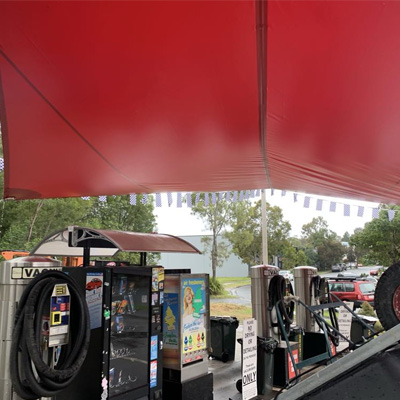
It is imperative that your tensioning of your shade sail is correct to avoid damage, and increase the duration of your shade sail.
Massive Warning Against Pre-made Shade Sails
While pre-made shade sails might seem like a quick and affordable solution, they come with significant drawbacks that can lead to poor performance, shorter lifespan, and even safety risks. One of the biggest issues with these off-the-shelf products is their reliance on webbing edges rather than reinforced tensioned edges.
- Lack of Strength: Webbed edges are less durable compared to reinforced edges. They can stretch unevenly over time, leading to sagging and water pooling in waterproof sails.
- Inadequate Tensioning: Proper tension is critical for a shade sail to function effectively, but web-edged sails often cannot withstand the necessary forces to maintain a taut installation. This can cause instability and increase the risk of tearing.
- Fit and Performance Issues: Pre-made sails come in standard sizes that rarely match the unique dimensions of your space. Without a custom fit, the sail may not align with anchor points, resulting in improper angles and poor water runoff.

Waterproof Tension Systems Systems vs Shade Sail Structures and Frames
Waterproof Tension Shade Sail Systems
These systems rely on carefully tensioned fabric sails to create a durable, weather-resistant canopy. They are anchored using posts, walls, or other fixed points and are designed to handle environmental stresses like rain and wind.
Advantages:
- Cost-Effective: Generally more affordable than framed structures due to reduced material and labor costs.
- Aesthetic Appeal: Sleek and modern, these sails create a dynamic visual effect, especially when installed with a hyperbolic paraboloid (hypar) shape.
- Customizable: Easily adapted to irregular spaces or unique layouts with custom shapes and sizes.
- Drainage: Proper tension and pitch ensure water runoff, avoiding pooling and fabric strain.
- Versatility: Suitable for residential, commercial, hospitality, and many more private and public spaces.

Shade Sail Structures and Frames
These systems involve sails integrated into a rigid, fixed frame, often built from steel, aluminum, or wood. The frame supports the sail, creating a more permanent and robust installation.
Advantages:
- Structural Stability: Frames provide a solid foundation, making them suitable for areas with high wind loads or heavy rain.
- Durable and Long-Lasting: Built with robust materials, these structures are less prone to wear over time.
- Uniform Tension: The frame ensures consistent tension across the sail, reducing maintenance needs.
- All-Weather Protection: Frames can support thicker, more rigid waterproof materials for enhanced durability and performance.
Which to Choose?
- Waterproof Tension Shade Sail Systems are ideal for projects where flexibility, cost-effectiveness, and visual appeal are priorities. They work well in smaller areas or when you need to adapt to unique shapes and layouts.
- Shade Sail Structures and Frames are better suited for large-scale, high-traffic, or permanent installations requiring maximum stability and durability.
The Key to a Durable and Stylish Waterproof Shade Structure
Building a waterproof shade structure, if done correctly, can be a versatile, practical and aesthetically pleasing alternative to a solid roof top.
We’ve also created a comprehensive FAQ page packed with expert advice and insights. Whether you’re exploring the best practices for installation or learning how to maximize the lifespan of your investment, this resource has you covered. Some of the questions we address include: “What is the best pitch for a waterproof shade sail?”, “Can I install a shade sail myself?”, and “Why is tension important for shade sails?” Visit our FAQ page or just contact us to find detailed answers and ensure your shade sail project is a success from start to finish!
By focusing on the correct pitch and tension, your waterproof shade sail will not only look great but also provide reliable protection against the elements. Call us today on 08 7077 2879 or contact us online to get started on a custom shade sail installation!

Disclaimer
The above advice is general in nature and does not take into consideration any site-specific circumstances. We do not represent this information as engineering or building advice. It is intended for informational purposes only. Shade sail engineering services are available upon request, and we strongly recommend that all waterproof shade sails and shade sail structures are designed and certified by a qualified engineer to ensure compliance with local regulations and to guarantee safety and durability. Always consult with a professional before undertaking any shade sail installation.